Exotic Domain TLDs Like firstname.tld Felt Special Until Renewals Kept Getting Expensive


A domain name is like your digital identity, providing you with an online address. It lays the groundwork for your online presence, whether you are choosing it for business or personal reasons. When choosing a domain name, people often fall into the trap of opting for top-level domains (TLDs) or country code top-level domains (ccTLDs), such as .app, .is, .sh, .io or .to, just to get their first name or business name, or to create a cool combination with the extension itself.
Unfortunately, by doing so, you are opting for a premium domain name that comes at an added cost, as well as a TLD or ccTLD whose long-term renewal costs may not remain stable, unlike .net, .com and .org, which have remained stable for decades.
It's not just your fault; most registrars have designed their domain availability search to lure you into getting your desired domain name from whichever registry. At first glance, they aren't being dishonest.
It's not wrong, per se, but I'd say they should provide a ten-year overview of it. It's not as if you would be willing to change your domain name to a cool TLD or ccTLD after three years. Once you have acquired it, you have to stick to it for a very long time or bear the cost of a .com, .net or .org for long enough to replace it.
A smart buyer would probably navigate to a website like tld-list.com to compare renewal prices and find the best deal, but this might not work for you outright as the prices of many TLDs and ccTLDs might increase exponentially over the years.
Premium Domain Names
There is also the curious case of 'premium' domain names. For example, let us look at the renewal prices for .app listed on TLD-list.com:
They are 12.18 USD at Cloudflare, 14.69 USD at Spaceship, 14.91 USD at Porkbun, and 23.18 USD at Namecheap.
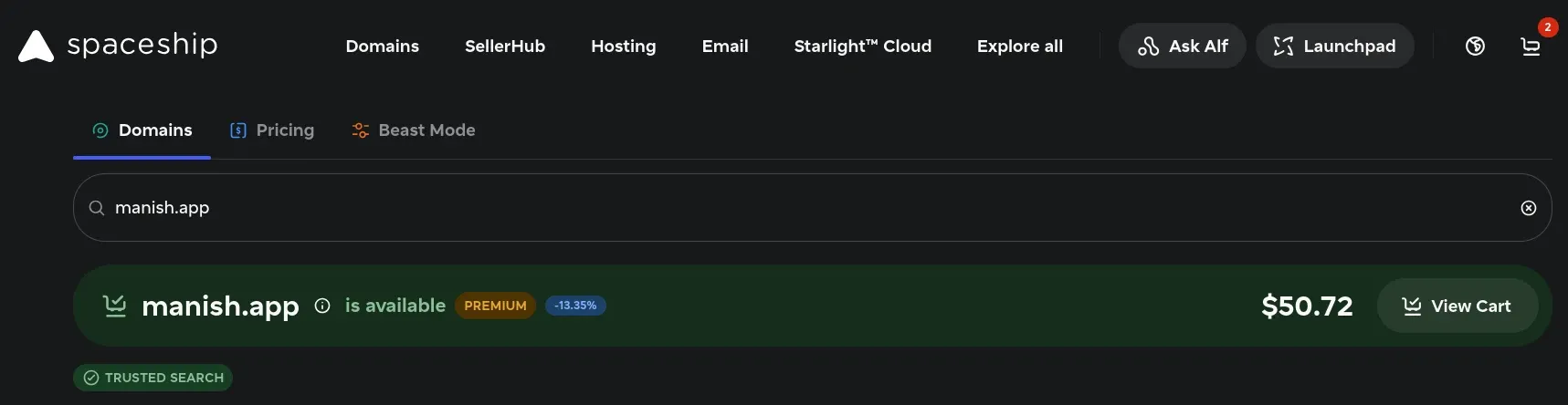
When I searched for the domain name manish.app, however, it was classified as a premium domain name on Cloudflare at 49.20 USD per year.

Spaceship wants to charge me 50.72 USD for it.
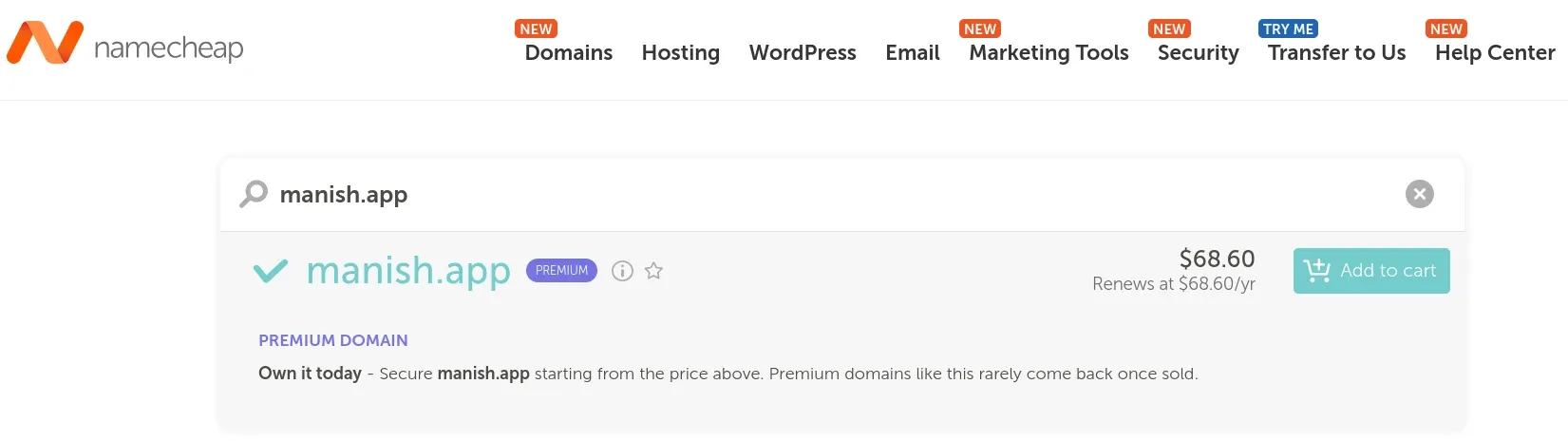
Namecheap, however, is only asking for an annual fee of 68.60 USD.
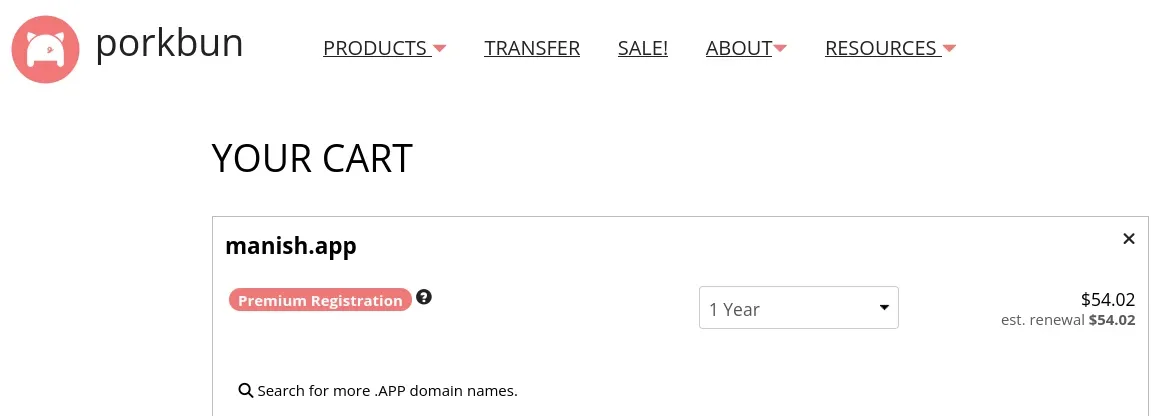
Porkbun wanted $54.02 per year for the same domain.
Another issue I have encountered with premium domain names is that you cannot register your domain name for 10 years.
I'm not targeting a specific TLD, but almost every TLD is guilty of price gouging.
First-year promotional pricing
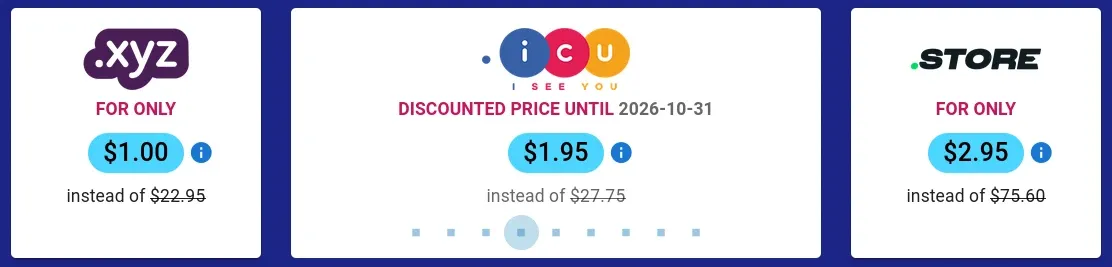
You are tempted to buy a cool top-level domain (TLD) such as .tech, .dev, .xyz, .online, .pro or .space at an irresistible price for the first year.

Excited about getting your first domain, you hit 'buy' and invest 10 months building your personal identity, links, email, etc.
Then, when the time comes to renew, you realise that you cannot avoid it, as the domain name is something you have invested a lot in and is essentially your digital identity.
These heavily discounted prices for the first year attract abuse of a TLD to the extent that TLDs such as .xyz and .top were caught up in issues related to their reputation for email delivery — they were outright rejected or bounced back. Even if you had set up your email correctly and had a clean IP, your email could still be rejected because of your choice of TLD.
Depending on the use case, you should choose your top-level domain (TLD) wisely.
A more established choice of TLD, such as .net or .com, with a less impressive-looking domain name, would be better in the long run. Otherwise, go with something run by a decent registry that offers the same or a good discount for a 10-year registration upfront.
In my personal experience, almost every gTLD supports 10-year registrations, except for premium domain names.
Here is a comparison of the cost of registering .xyz and .win for 10 years at US-based Registrar Porkbun and German Registrar Joker.com:
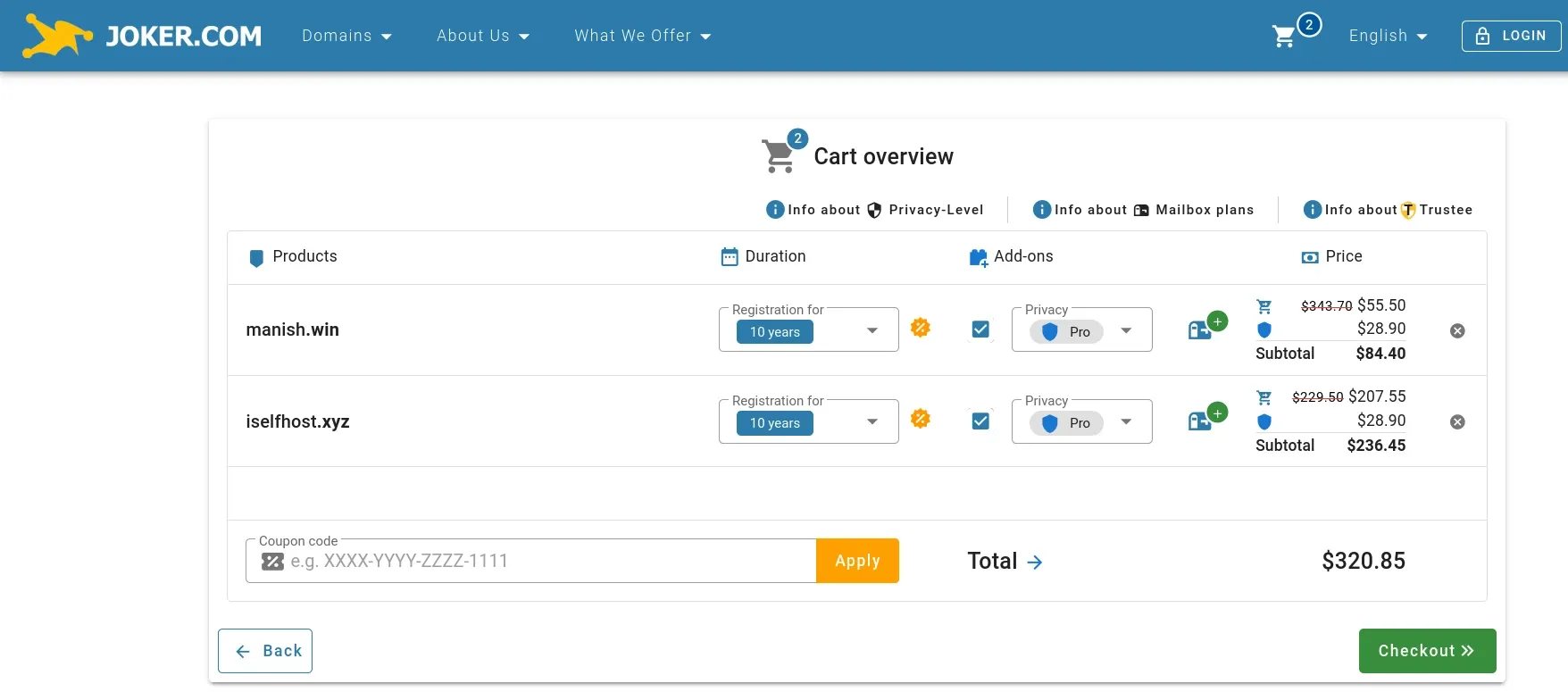
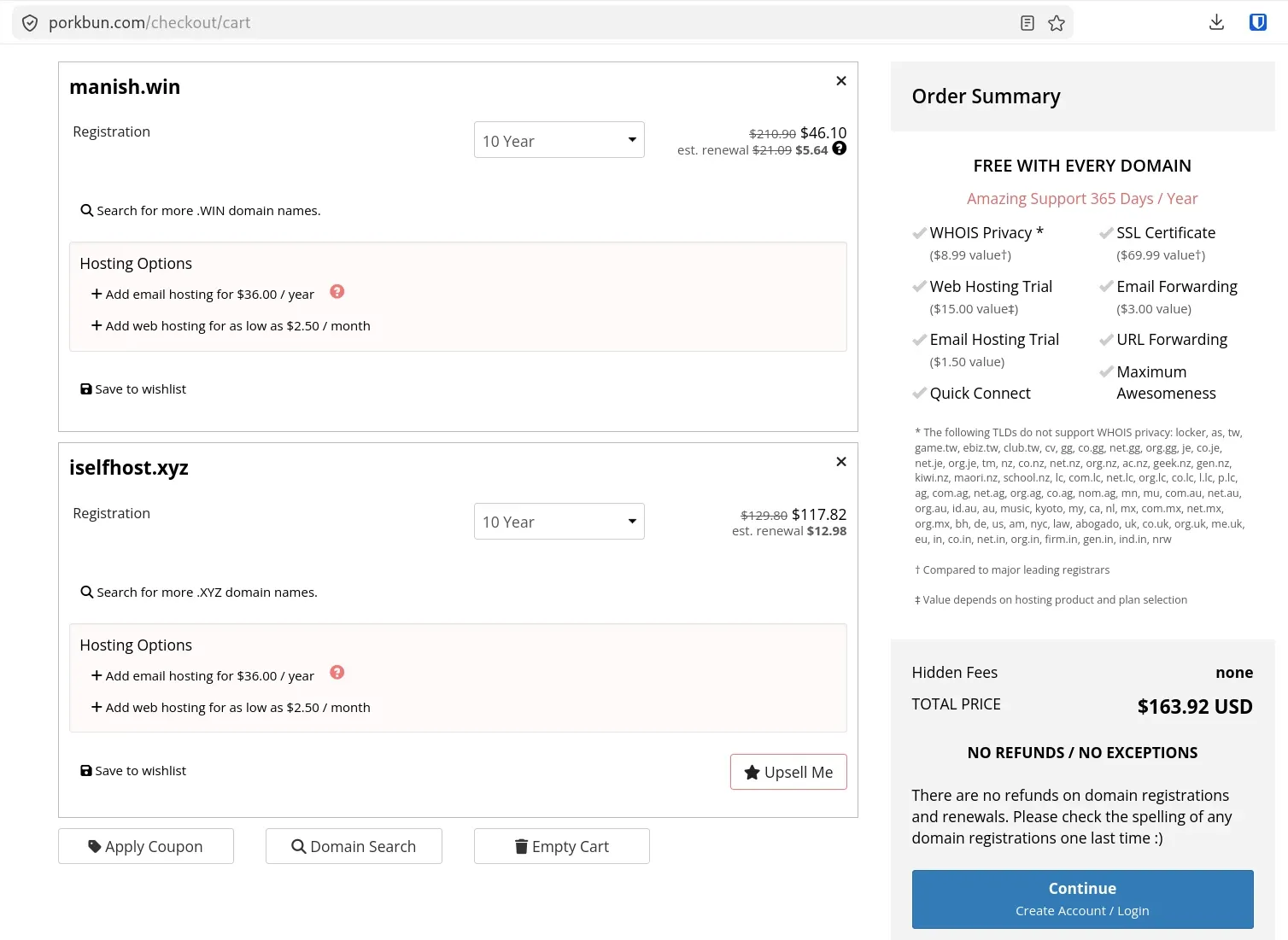
If you compare a few registrars, you will surely find a good deal on a 10-year registration for the domain name you are interested in. For example, I could get firstname.win for 10 years at Porkbun at an unbelievable price of 46.10 USD.
Interestingly, the total price for a ten-year registration of the 'firstname.win' domain is actually less than the annual renewal fee for my personal ccTLD domain.
At the same time, if you compare the .xyz and .net TLDs for the same domain name, the pricing is actually not that different for a 10-year registration with the European registrar and hosting provider Scaleway (131.10 EUR) or the US-based registrar Porkbun (125.20 USD).
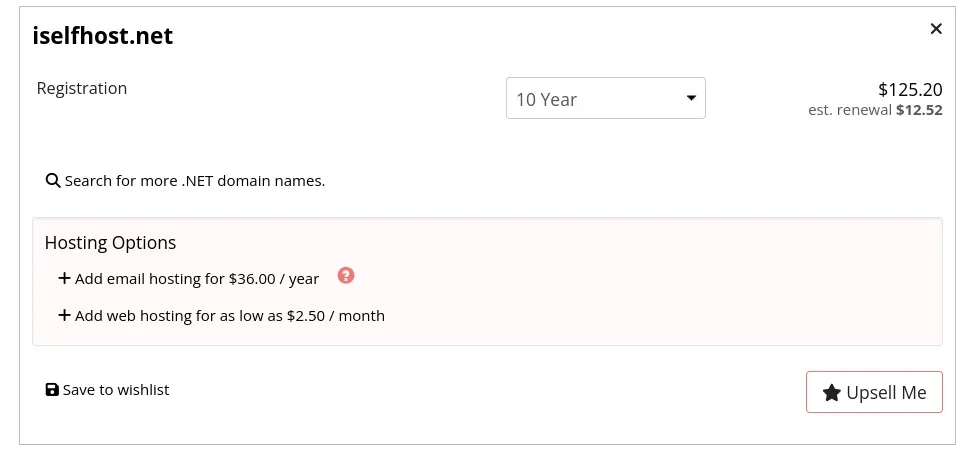
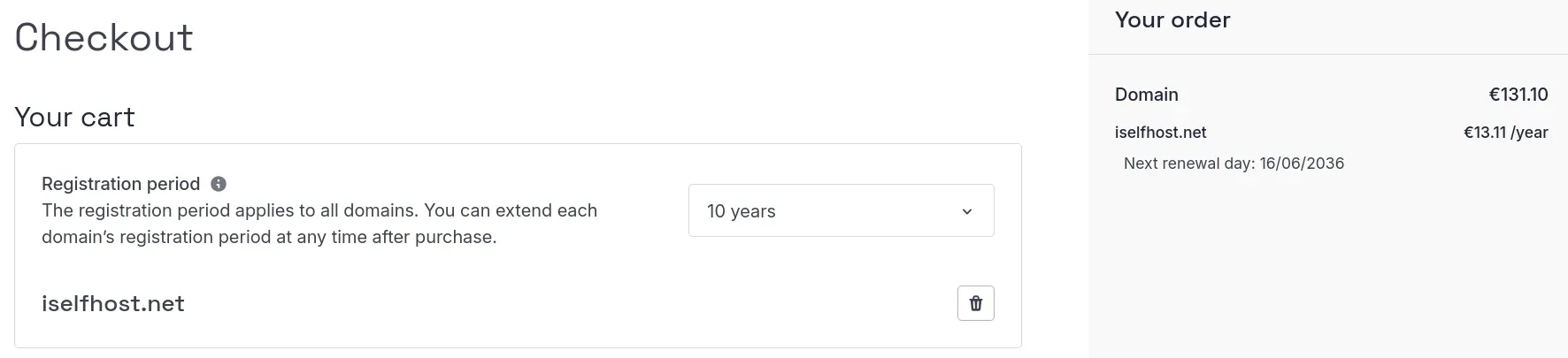
So, which would you choose? Personally, I would choose .net over .xyz at this price point.
For not-so-popular TLDs, always dig for the best deal with different registrars
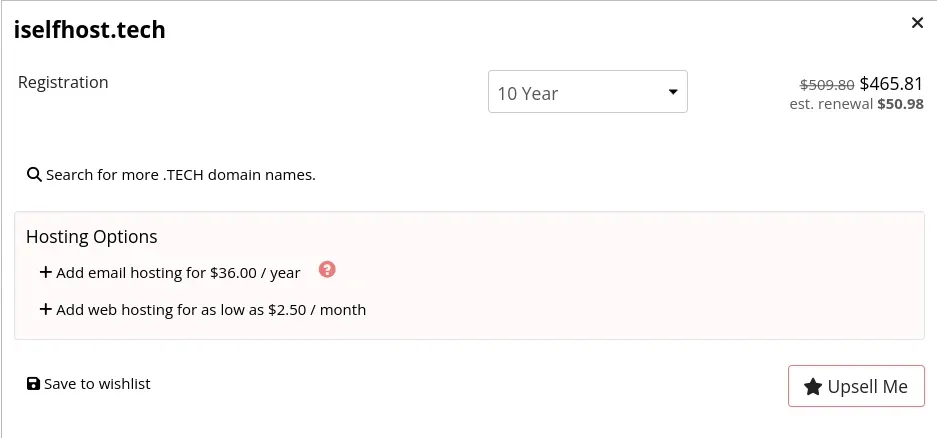
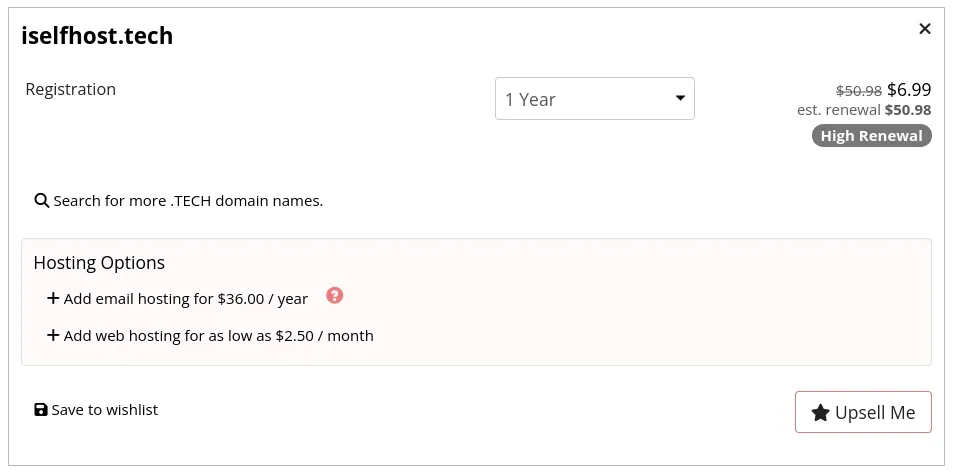
A .tech domain from Porkbun, who gave us the best 10-year registration deal for the .win TLD, costs 6.99 USD, with a renewal cost of 50.98 USD per year. This amounts to a total price of 465.81 USD for 10 years.
In comparison, Joker, a German registrar, can get us a 10-year registration for the .tech TLD with their Privacy Pro add-on for under 200 USD.
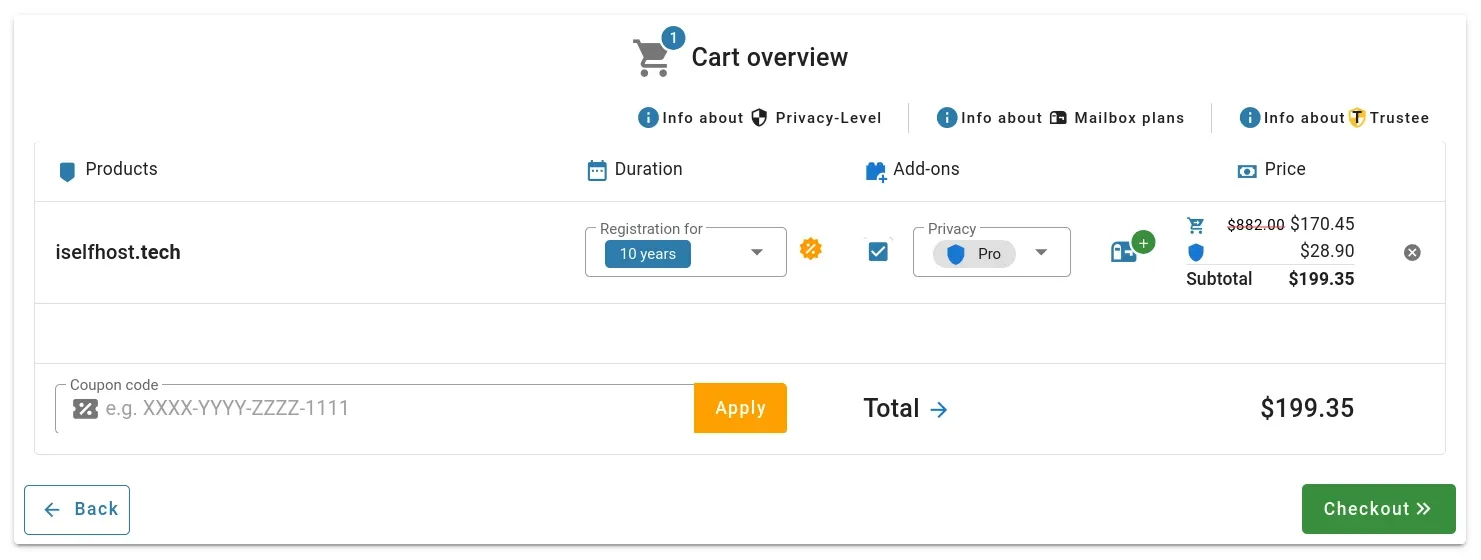
These savings of 265 USD could be put towards decent VPS hosting and other tools that would create a positive impression on your readers.
Free Domain name Trap
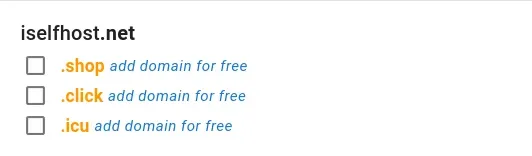
When registering a domain name, many registrars try to bundle in free domain names from other TLDs. This is nothing but a promotional discount for the first year, where the fee for the domain is waived in the hope that you will renew it at a good price for years to come.
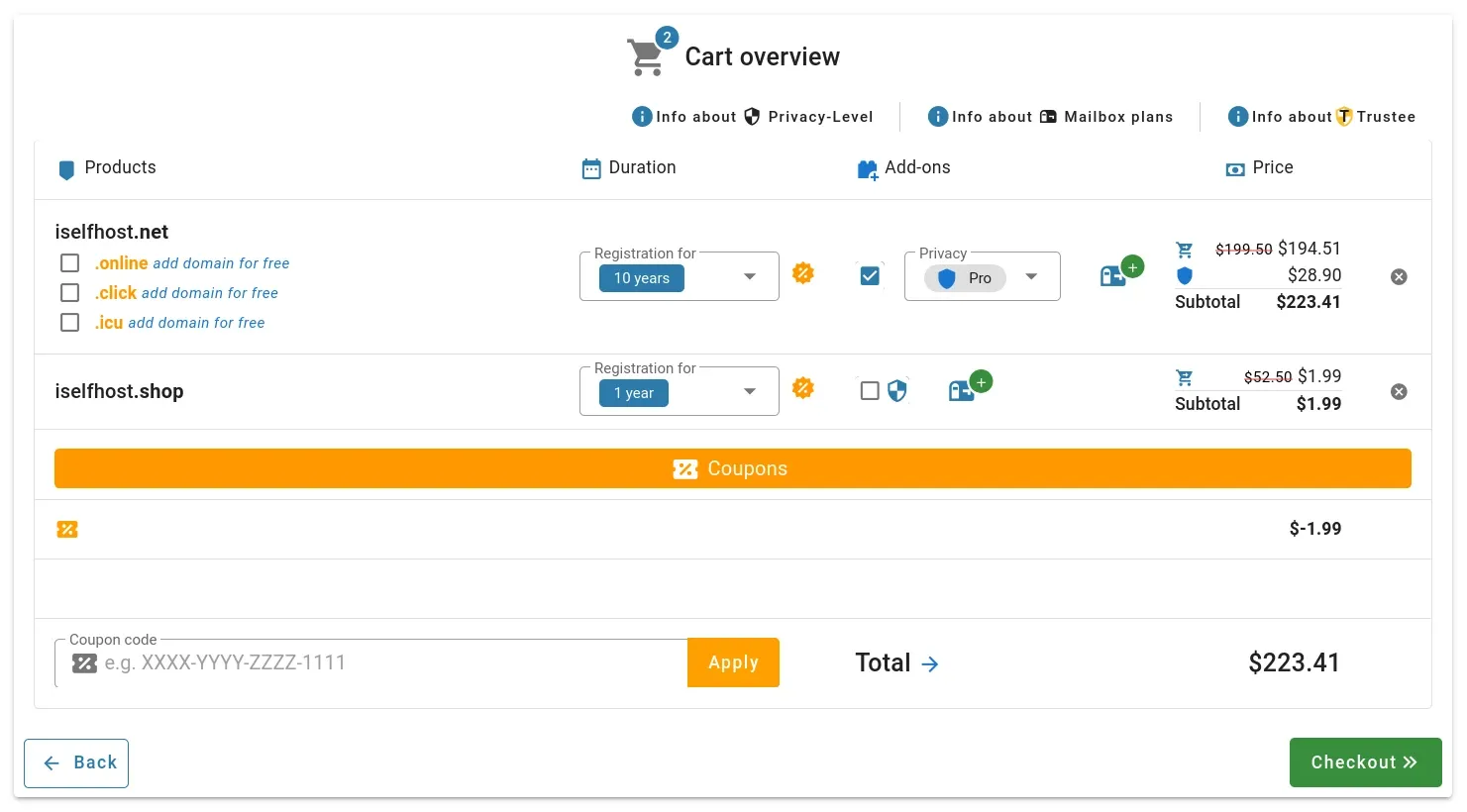
Please do not register these domains just to try them out, because once you have invested your time and energy in something, it is really hard to let go. Over time, you would end up spending more than you would on the primary domain itself, without realising it.
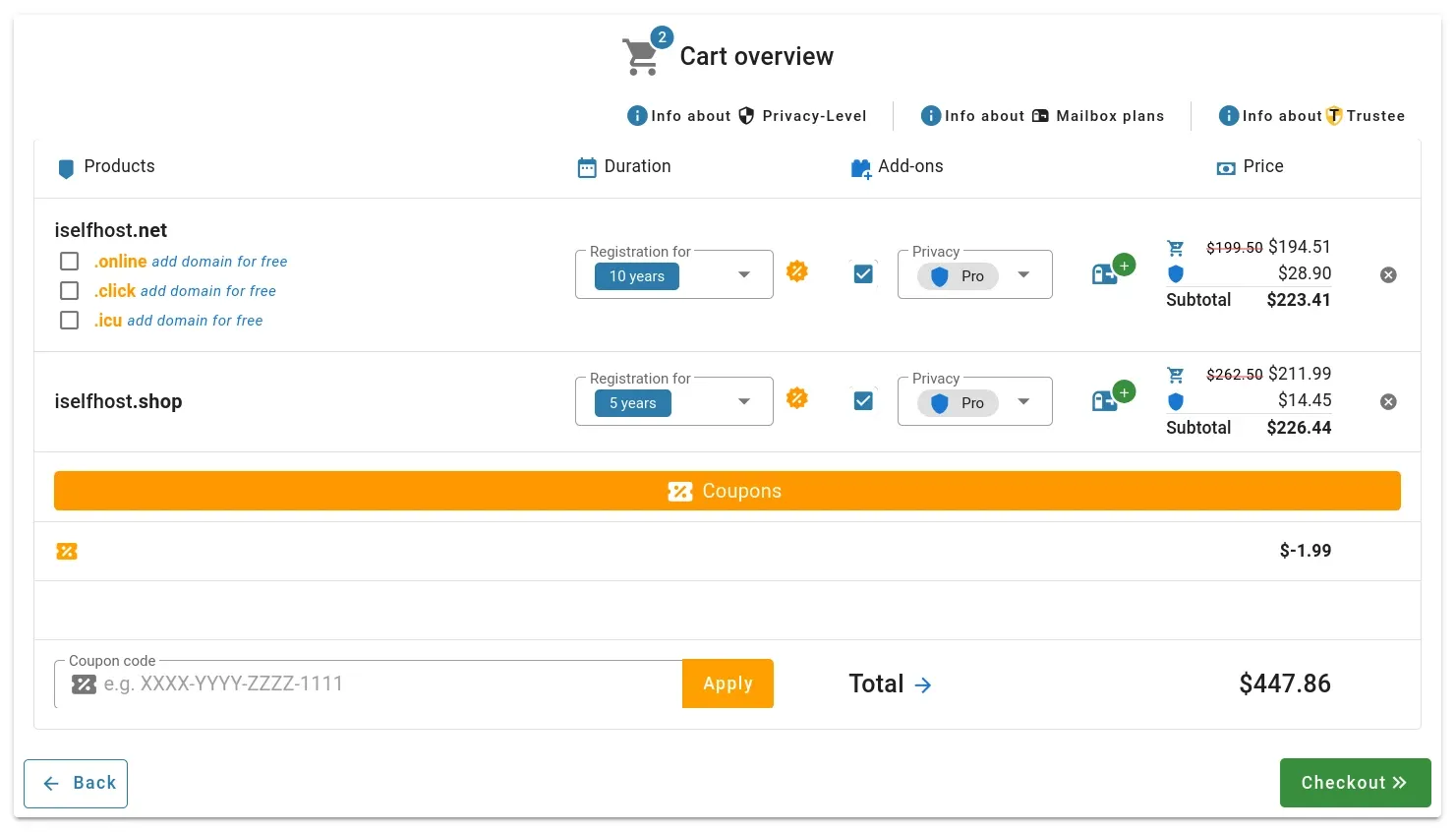
As discussed previously, if it is a genuinely free or heavily discounted bundle and you can get a ten-year registration, there is no harm in acquiring it. However, make sure you check the regular renewal prices from other registrars or the registry itself before making a decision.
No real benefits. Issues? Sure.
Exotic top-level domains (TLDs) or premium domain names don't offer any SEO advantages (Google treats them as generic), so you're paying extra for no benefit in terms of ranking. You might also encounter issues such as emails from .xyz being considered spam due to the poor reputation of the TLD, mostly because of the abuse that came with the promotional first-year pricing.
You may also end up paying increasing renewal costs every year just because you chose a fancy or premium TLD or ccTLD to get your desired domain name. There are thousands of new top-level domains that will get you firstname.tld.
My personal .is domain name case:
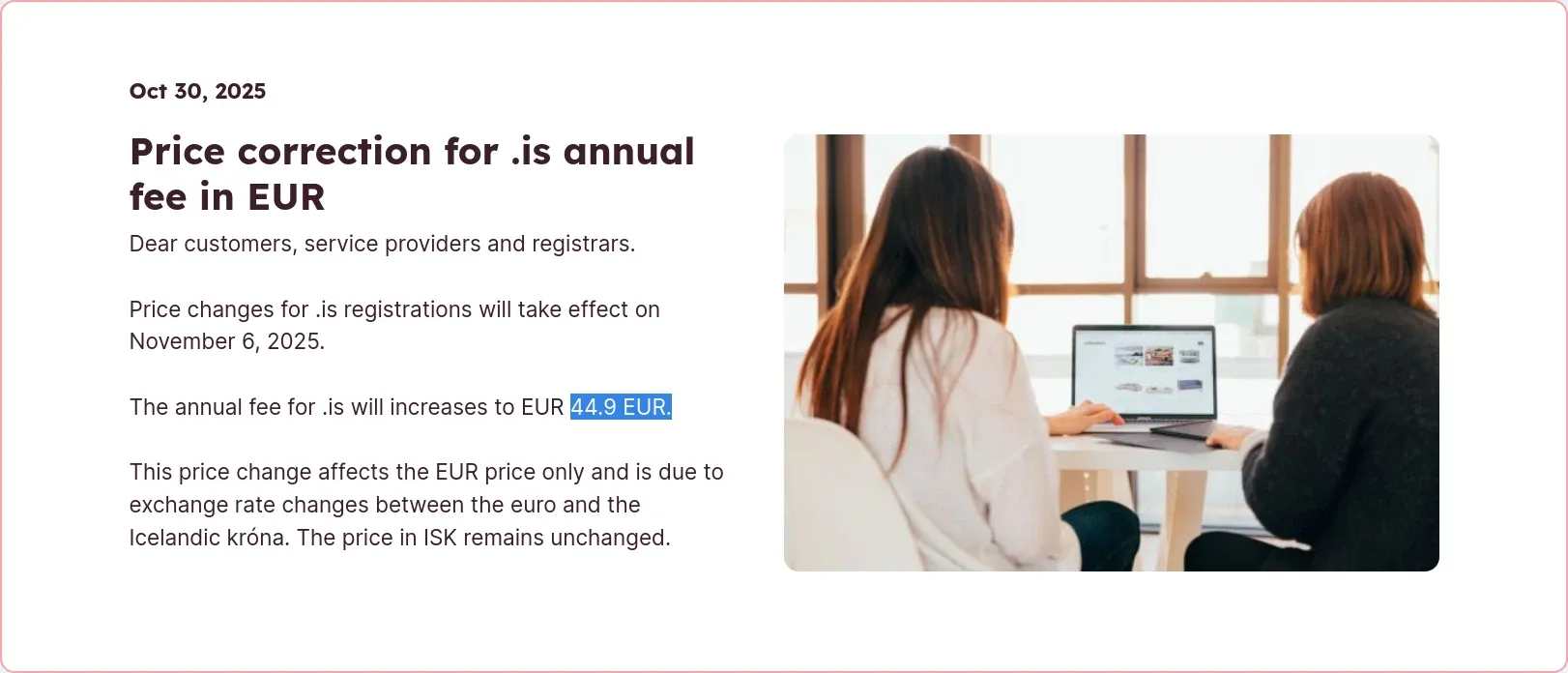
Renewing my personal domain costs me an arm and a leg now — 44.90 EUR a year! I originally registered it for €29.90. That's an increase of 50.17%!
This is what I am supposed to pay for the upcoming annual renewal of my personal domain, which I opted for a couple of years ago:
I wish I had opted for the .win TLD instead. It was and still is available at dirt-cheap prices for a ten-year registration.
Which Domain Registrar? An Accredited one!
I suggest looking for an accredited registrar on the official registry website for the TLD in which you want a domain name. Even if your registrar does not have a portal for managing registration, deregistration, renewal, transfers, transfers of registration, delegation and DS record, etc. , as long as they are an accredited registrar, it does not really matter.
There is actually one such registrar for the Swedish .se and .nu TLDs: It is the Sweden-based company SpaceDump IT AB.
To verify its authenticity, simply navigate to the registrar's list of Swedish .se and .nu top-level domains.
Although most popular registrars are usually accredited or authorised, it won't hurt to look for information. 'Trust, but verify' should be your motto when it comes to finding a good registrar. While freebies like free Whois protection can be useful, don't hesitate to pay a small fee for them if you're getting a reputable registrar for your top-level domain (TLD).
There is no ideal situation unless you opt for one of the most popular TLDs, such as .com, .net and .org.
DNSSEC (Domain Name System Security Extensions)
Almost every TLD supports DNSSEC. I think all gTLDs do, and certainly almost all of them do.
A simple dig command to find out whether a TLD supports DNSSEC is as follows:
$ dig xyz. DNSKEY +short
A zone that is in the process of enabling or disabling DNSSEC could have a DNSKEY record set, even if the parent zone has no DS record set and is not secure. However, if you don't see a DNSKEY for that query, it's a clear no.
You could encounter a janky registrar or registry that does not allow registrants to enable DNSSEC. At a normal person scale, with domains in gTLDs and a few ccTLDs, check whether your ccTLD supports DNSSEC and read your registrar's documentation, and you are good to go!